Fresh Chimichurri Sauce Recipe – Zesty & Easy
Chimichurri sauce is more than just a condiment; it’s an experience. This vibrant, herbaceous concoction, origin extractating from Argentina and Uruguay, has captivated palates worldwide with its bold, fresh flavors. What is it about this simple blend of parsley, oregano, garlic, vinegar, and olive oil that makes it so universally adored? For me, it’s the sheer versatility and the way it can instantly elevate the most humble grilled steak to culinary stardom. It’s that bright, zesty punch that cuts through richness, awakening your taste buds and making every bite sing. Whether you’re an aspiring grill master or just looking to add a burst of freshness to your weeknight meals, mastering this chimichurri sauce is a game-changer. It’s a testament to how a few quality ingredients, when combined thoughtfully, can create something truly extraordinary.
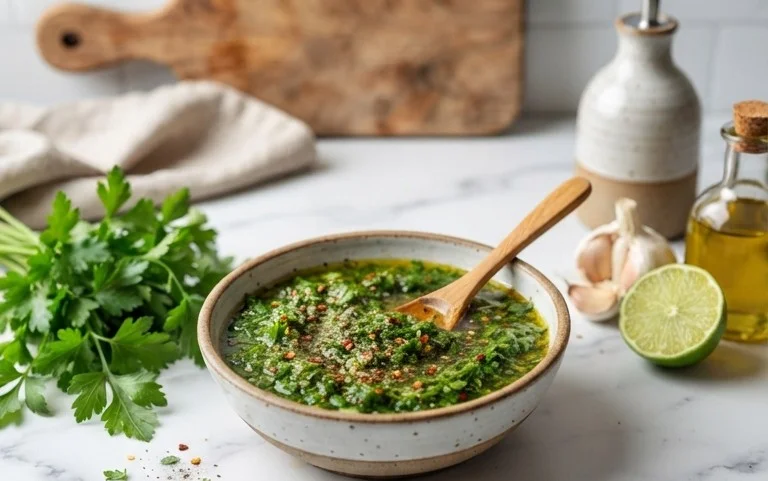
Chimichurri Sauce
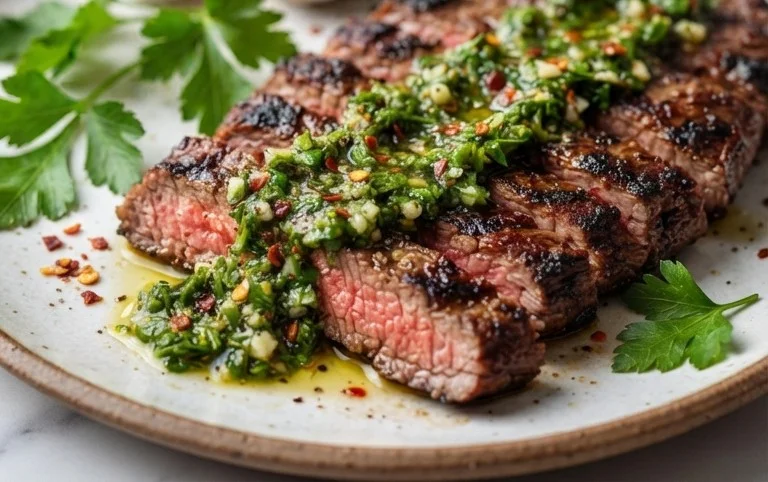
There are few condiments that possess the vibrant, herbaceous punch and undeniable versatility of chimichurri. Origin extractating from Argentina and Uruguay, this bright green sauce is a revelation. Forget boring steak sauces; chimichurri is a flavor explosion waiting to happen. It’s a staple for grilled meats, particularly flank steak and skirt steak, but its uses extend far beyond that. I love drizzling it over grilled vegetables, using it as a marinade for chicken or fish, or even stirring a spoonful into roasted potatoes for an instant flavor upgrade. The beauty of chimichurri lies in its simplicity and freshness. It’s a no-cook sauce that relies on the quality of its ingredients, and the result is something truly special. The balance of tangy vinegar, pungent garlic, and the fresh medley of herbs is nothing short of magical. Get ready to elevate your cooking with this incredible sauce.
Ingredients:
Instructions:
1. Prepare the Fresh Herbs: The foundation of this incredible sauce is its fresh herbs. You’ll want to start by rinsing your fresh parsley and cilantro thoroughly under cool water. Gently pat them dry with paper towels or use a salad spinner to remove as much excess moisture as possible. This is crucial because excess water can dilute the flavors and make your chimichurri watery. For the parsley, you’ll want to remove any thick stems, focusing on the leafy parts. Similarly, for the cilantro, remove the thicker stems, keeping the delicate leaves and thinner stems. If you’re using fresh oregano, strip the leaves from the woody stems. If you’re opting for dried oregano, you’ll use a much smaller amount – just 1 teaspoon. Make sure your herbs are finely chopped. The finer the chop, the more cohesive and well-blended your chimichurri will be. You can achieve this by finely mincing them by hand with a sharp knife or by pulsing them a few times in a food processor. Be careful not to over-process them into a paste; you still want a little texture.
2. Mince Aromatics and Combine with Herbs: Next, we’ll tackle the aromatics. Take your quarter of a small red onion (or a small shallot if you prefer a milder onion flavor) and mince it very finely. The smaller the pieces, the more evenly the onion flavor will distribute throughout the sauce without any overpowering bites. Next, peel and finely mince your garlic cloves. Again, a fine mince is key here for a smooth integration of flavor. Once your herbs, onion (or shallot), and garlic are all finely prepped, transfer them into a medium-sized mixing bowl. This is where all the vibrant green goodness will come together.
3. Add the Liquids and Seasonings: Now it’s time to introduce the liquids and seasonings that will transform the chopped herbs and aromatics into a flavorful sauce. Pour in the red grape juice vinegar and the fresh lemon juice. The vinegar provides a bright, tangy acidity that cuts through richness, while the lemon juice adds another layer of citrusy freshness. Add the 1/2 teaspoon of salt at this stage. Remember, you can always add more salt to taste later, but it’s harder to take it away. If you like a little heat, sprinkle in the 1/4 teaspoon of red pepper flakes now. You can adjust this amount to your preference – a little goes a long way, and you can always add more if you want it spicier. Stir everything together gently with a spoon. At this point, the mixture will look quite wet and fragrant, a beautiful precursor to the final sauce.
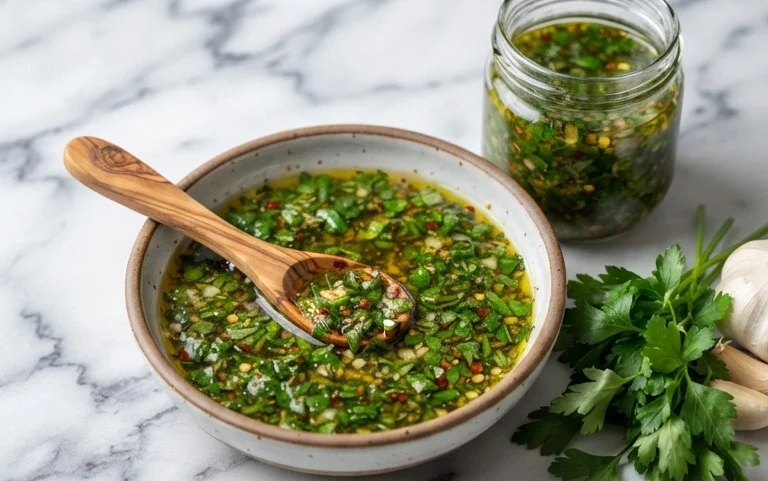
4. Emulsify with Olive Oil: This is the crucial step where the chimichurri truly comes together. Slowly drizzle in the 3/4 cup of olive oil while continuously stirring. You want to add the oil in a thin, steady stream. As you stir, you’ll notice the mixture starting to emulsify. This means the oil and the liquid ingredients are coming together to form a cohesive sauce rather than separating. Keep stirring until all the olive oil is incorporated and the chimichurri has a beautiful, slightly thickened consistency. The consistency should be pourable but not watery. The color will deepen to a rich, vibrant green. This is a good time to taste your chimichurri and adjust the seasonings. Does it need a pinch more salt? Perhaps a little more tang from the vinegar or lemon juice? Do you want it spicier? Make these adjustments now until it sings to your palate.
5. Rest and Serve: The final step for the best chimichurri is to let it rest. While you can technically use it immediately, I highly recommend letting the flavors meld and deepen for at least 15-30 minutes at room temperature, or even longer in the refrigerator. This resting period allows the herbs and garlic to infuse into the vinegar and oil, creating a more complex and harmonious flavor profile. If you refrigerate it, the olive oil may solidify slightly; just let it sit at room temperature for a bit before serving or give it a good stir to bring it back to its saucy consistency. Chimichurri is incredibly versatile. It’s a classic accompaniment to grilled steak, chicken, beef, and fish. Don’t be afraid to experiment! Drizzle it over roasted vegetables like potatoes, cauliflower, or asparagus. Use it as a flavorful marinade for proteins. It’s even delicious stirred into scrambled eggs or used as a sandwich spread. Store any leftover chimichurri in an airtight container in the refrigerator for up to a week. Enjoy this burst of fresh flavor!
Conclusion:
There you have it! This vibrant and zesty chimichurri sauce recipe is truly a game-changer for any meal. Its incredible freshness, herbaceous aroma, and perfectly balanced tangin extractess elevate even the simplest dishes from ordinary to extraordinary. We’ve explored how easy it is to whip up this Argentinian classic, which relies on a harmonious blend of fresh parsley, oregano, garlic, vinegar, and olive oil. Don’t be afraid to experiment! It’s incredibly versatile, so feel free to adjust the spice level or add a pinch of red pepper flakes for an extra kick.
Beyond grilled meats, which it’s famously paired with, I encourage you to try this chimichurri as a marinade for chicken or fish, a dollop on roasted vegetables, or even stirred into a grain salad. The possibilities are truly endless, and once you experience its bright flavor, you’ll be reaching for it again and again. So, gather your ingredients and give this fantastic recipe a whirl – I promise you won’t be disappointed!
Frequently Asked Questions:
Q1: How long does chimichurri sauce last?
Stored in an airtight container in the refrigerator, this delicious chimichurri sauce will stay fresh for about 1 to 2 weeks. The olive oil helps to preserve it, and the acidity from the vinegar also contributes to its longevity. It’s best to give it a good stir before each use.
Q2: Can I make this recipe ahead of time?
Absolutely! In fact, I often find that the flavors meld even more beautifully if you let the chimichurri sauce sit for at least an hour, or even overnight, in the refrigerator before serving. This allows all the fresh herbs and garlic to infuse the oil and vinegar perfectly.
Chimichurri Sauce
A vibrant and flavorful Argentinian sauce, perfect for grilled meats and vegetables.
Ingredients
-
1 1/2 cups well packed (42g) fresh parsley
-
1/2 cup well packed (20g) fresh cilantro
-
1/4 cup (9g) fresh oregano
-
1/4 small red onion
-
3 garlic cloves
-
3 Tbsp red grape juice vinegar
-
2 Tbsp fresh lemon juice
-
1/2 tsp salt
-
1/4 tsp red pepper flakes
-
3/4 cup olive oil
Instructions
-
Step 1
Finely chop the fresh parsley, cilantro, oregano, and red onion. Mince the garlic cloves. -
Step 2
In a medium bowl, combine the chopped herbs, onion, minced garlic, red grape juice vinegar, fresh lemon juice, salt, and red pepper flakes (if using). -
Step 3
Whisk the ingredients together until well combined. -
Step 4
Slowly drizzle in the olive oil while whisking continuously until the sauce is emulsified. -
Step 5
Taste and adjust seasoning with more salt or red pepper flakes if desired. -
Step 6
For best flavor, let the chimichurri sauce rest for at least 10-15 minutes before serving.
Important Information
Nutrition Facts (Per Serving)
It is important to consider this information as approximate and not to use it as definitive health advice.
Allergy Information
Please check ingredients for potential allergens and consult a health professional if in doubt.