Perfect French Macaron Recipe – Easy Homemade Delights
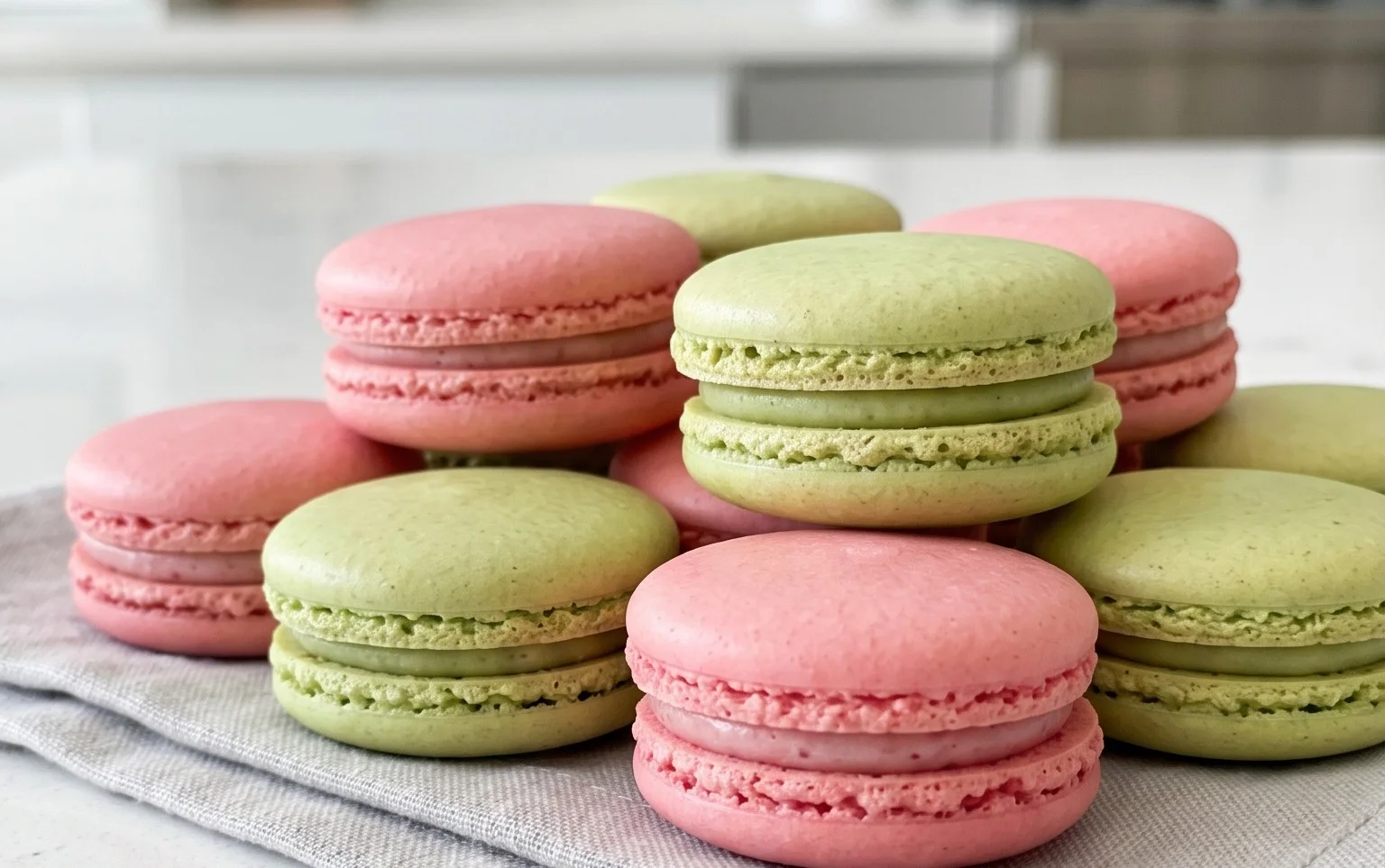
French macarons are the delicate, colorful, and utterly irresistible cookies that have captured the hearts (and taste buds!) of dessert lovers worldwide. There’s something inherently magical about a perfectly crafted French macaron – that crisp shell yielding to a chewy interior, followed by a luxuriously smooth filling. These petite marvels are more than just a treat; they’re a work of art, a testament to precision and patience in the kitchen. Why the obsession? It’s the sheer elegance, the burst of vibrant flavors, and the satisfying texture that make French macarons so unique. They’re the perfect accompaniment to a cup of coffee, a delightful centerpiece for a special occasion, or simply a moment of pure, unadulterated indulgence. Today, we’re going to demystify the process and guide you step-by-step to creating your own stunning French macarons at home.
French Macaron Recipe
Welcome to the magical world of French macarons! These delicate, colorful, and utterly delicious meringue-based cookies are a true testament to patience and precision in the kitchen. While they have a reputation for being finicky, with the right guidance and a bit of practice, you’ll be creating beautiful macarons that will impress everyone. This recipe will walk you through the process, ensuring you understand each step and why it’s important. So, gather your ingredients, and let’s embark on this sweet adventure!
Ingredients:
Preparing Your Ingredients and Workspace
Before you even think about mixing, proper preparation is key. Ensure all your ingredients are measured accurately. For the almond flour, it’s crucial to sift it. Sifting removes any larger lumps and ensures a smooth texture for your macaron shells. Measure the almond flour after sifting to ensure you have the correct amount. You can even pulse sifted almond flour and powdered sugar together in a food processor a few times to get an extra-fine consistency, but be careful not to over-process, which can release oils from the almonds. The powdered sugar will also be sifted with the almond flour. Combine your sifted almond flour, powdered sugar, and salt in a medium bowl and set aside.
For the egg whites, make sure they are at room temperature. This helps them whip up into a stable meringue more effectively. You can achieve room temperature by separating your eggs a day in advance and leaving the whites covered at room temperature, or by placing them in a bowl over a warm water bath for a few minutes, stirring gently.
Making the Meringue
This is arguably the most crucial step. We will be making an Italian meringue for this recipe, which is known for its stability.
1. Start Whipping the Egg Whites: In a clean, dry bowl of a stand mixer (or using a hand mixer), add your room-temperature egg whites. Begin extract whipping them on medium speed until they become foamy and opaque. At this stage, slowly add the granulated sugar, a tablespoon at a time, while the mixer is still running. Continue to whip the egg whites on medium-high speed.
2. Cook the Sugar Syrup: While the egg whites are whipping, it’s time to make the sugar syrup. In a small saucepan, combine the granulated sugar and about 2 tablespoons of water. Heat this mixture over medium heat, stirring occasionally until the sugar dissolves. Once the sugar is dissolved, stop stirring. You want to reach a temperature of 244°F (118°C) on a candy thermometer. This is the “soft-ball” stage, and it’s essential for the meringue’s structure.
3. Combine Syrup and Meringue: Once your sugar syrup reaches 244°F (118°C), immediately remove it from the heat. With the mixer running on medium-high speed, very slowly and carefully pour the hot sugar syrup in a thin, steady stream down the side of the mixer bowl, avoiding the whisk attachment. Be extremely cautious, as the syrup is very hot.
4. Whip to Stiff Peaks: Once all the syrup has been added, increase the mixer speed to high and continue to whip the meringue until the bowl is cool to the touch and the meringue is stiff, glossy, and holds firm peaks. This can take about 8-10 minutes. When you lift the whisk, the meringue should stand straight up without drooping. This is your stable Italian meringue!
Macaronage: The Art of Folding
This is where we combine the dry ingredients with the meringue. This technique is called “macaronage,” and it’s vital for achieving smooth, perfectly formed shells.
1. Fold in Dry Ingredients: Add the sifted almond flour, powdered sugar, and salt mixture to the meringue in two or three additions. Using a rubber spatula, gently fold the dry ingredients into the meringue. Scrape down the sides and bottom of the bowl, bringin extractg the batter from the bottom up and over the dry ingredients. Be careful not to overmix or undermix.
2. Achieve the Lava-like Consistency: Continue folding until the batter reaches a “lava-like” consistency. This means when you lift the spatula, the batter should fall off in a thick, continuous ribbon that slowly melts back into itself within about 20-30 seconds. It should not be too stiff (which will result in lumpy, cracked shells) or too runny (which will result in flat, spread-out shells). This is the most important visual cue to master. You can also test by drawing a figure-eight with the batter – if the figure holds its shape for a moment before melting, you’re there.
3. Add Color and Flavor: Gently fold in your liquid-gel food coloring and vanilla extract during the last few folds. Start with the recommended amount of food coloring and add more, a drop at a time, until you achieve your desired vibrant color. Remember that colors can deepen slightly after baking.
Piping and Baking
Now for the fun part – creating your macaron shells!
1. Prepare Your Baking Sheets: Line two baking sheets with parchment paper or silicone baking mats. If using parchment paper, you can draw circles on the underside of the paper as a guide (about 1.5 inches in diameter), leaving at least 1 inch between each circle. This will help you pipe uniformly sized macarons.
2. Fill Your Piping Bag: Transfer the macaron batter to a piping bag fitted with a round tip (about 1/2 inch in diameter). Hold the piping bag vertically, about an inch above the baking sheet, and pipe small, uniform circles, filling in the drawn guides if you’re using them. Stop piping before you reach the edge of the guide, as the batter will spread slightly. Tap the baking sheets firmly on the counter several times to release any trapped air bubbles. This is a crucial step for preventing cracked shells. You can also use a toothpick to pop any remaining bubbles on the surface.
3. Resting Period: Allow the piped macarons to rest at room temperature for at least 30-60 minutes, or until a skin forms on the surface. When you gently touch a macaron, it should feel dry and not stick to your finger. This resting period is essential for developing the “feet” – the ruffled edges that form at the base of the macaron during baking.
4. Baking Your Macarons: Preheat your oven to 300°F (150°C). Bake the macarons one tray at a time for 12-15 minutes. The exact baking time will vary depending on your oven. They are ready when the tops are firm and do not wiggle when gently nudged, and the feet have formed nicely. You should be able to lift a macaron shell off the parchment paper without it sticking. If they are browning too quickly, you can lower the oven temperature slightly.
Cooling and Filling
1. Cool Completely: Once baked, remove the baking sheets from the oven and let the macarons cool completely on the baking sheets. Do not try to remove them while warm, as they will likely break.
2. Assemble Your Macarons: Once the shells are completely cool, gently peel them off the parchment paper. Pair up similarly sized macaron shells. Pipe your chosen filling (vanilla buttercream is a classic choice!) onto the flat side of one shell, then gently sandwich it with another shell.
3. Maturation is Key: For the best flavor and texture, it’s highly recommended to let your filled macarons “mature” in an airtight container in the refrigerator for at least 24 hours. This allows the filling to soften the shells and the flavors to meld beautifully. Before serving, let them sit at room temperature for about 15-20 minutes.
Enjoy your homemade French macarons! They are a labor of love, but the reward is absolutely worth it. Happy baking!
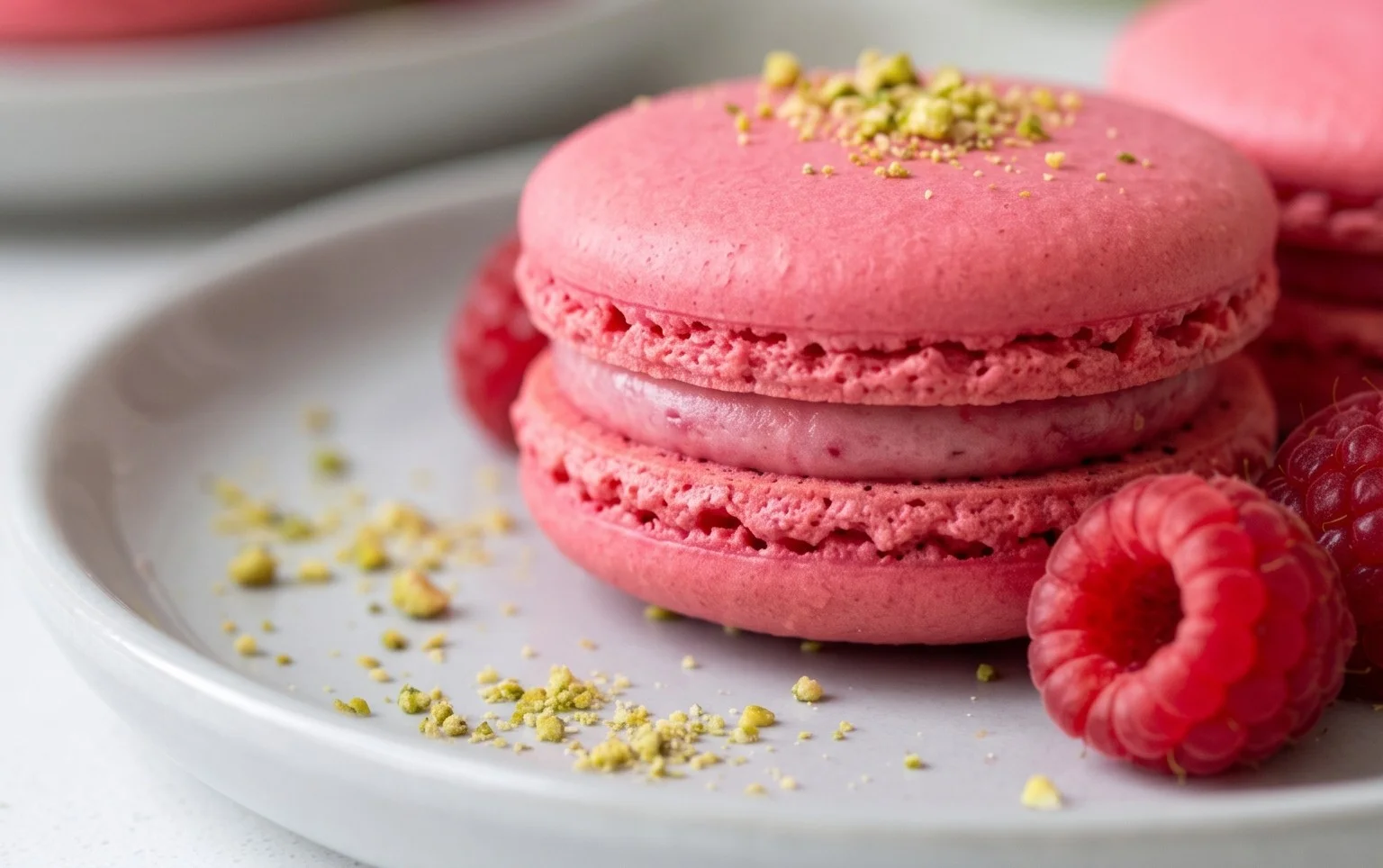
Conclusion:
I hope you’re feeling inspired to embark on your own French macaron adventure! This recipe, with its clear steps and emphasis on precision, truly makes achieving those delicate, chewy-on-the-inside, crisp-on-the-outside delights more accessible than you might think. The sheer elegance and satisfying crunch of a well-made French macaron are unparalleled, making them perfect for any special occasion or simply as a delightful treat to brighten your day.
Imagin extracte them gracing a dessert table at a birthday party, served alongside coffee as a sophisticated afternoon pick-me-up, or even presented as a heartfelt homemade gift. The possibilities are endless! Don’t be afraid to experiment with different flavorings and fillings once you’ve mastered the basic technique. Think vibrant raspberry fillings, rich chocolate ganache, zesty lemon curd, or even more adventurous combinations like salted caramel or lavender honey.
I truly encourage you to give this French macaron recipe a try. The journey of learning to make them is incredibly rewarding, and the taste of success – and the delicious macarons themselves – is absolutely worth it. Happy baking!
Frequently Asked Questions:
Why are my macaron shells cracked?
Cracked shells are often caused by over-whipped meringue (too stiff) or an oven that’s too hot. Ensure your meringue is glossy and forms stiff peaks, and consider using an oven thermometer for accuracy. You might also try slightly under-whipping if you consistently experience cracking.
What is ‘macaronage’ and why is it important?
‘Macaronage’ refers to the process of folding the dry ingredients into the meringue. It’s crucial because it develops the batter’s consistency. You want to fold until the batter flows like lava, forming a ribbon when lifted, but not so much that it becomes too thin. Over-mixing will result in flat, spread-out macarons.
My macarons have ‘feet,’ but they’re hollow inside. What did I do wrong?
Hollow macarons can be a sign of an under-baked cookie. Ensure they are baked until the feet are well-formed and the shells are firm to the touch. Sometimes, a slightly lower oven temperature for a longer duration can help them cook through more evenly. Also, ensure your meringue is properly made and incorporated.
French Macaron Recipe
A classic French macaron recipe yielding delicate meringue cookies with a soft, chewy interior and a crisp shell, perfect for filling with buttercream or ganache.
Ingredients
-
150 grams sifted super-fine almond flour
-
180 grams powdered sugar
-
1/4 teaspoon salt
-
120 grams large egg whites (at room temperature)
-
60 grams granulated sugar
-
4 drops liquid-gel food coloring
-
1 teaspoon pure vanilla extract
-
Vanilla Buttercream Frosting (for filling)
Instructions
-
Step 1
Whisk together sifted almond flour, powdered sugar, and salt in a bowl. If using, add food coloring to the egg whites and whisk until incorporated and a uniform color is achieved. -
Step 2
In a separate bowl, beat the egg whites until foamy. Gradually add the granulated sugar, a tablespoon at a time, while continuing to beat, until stiff, glossy peaks form. -
Step 3
Gently fold the dry ingredients into the meringue in three additions, mixing until just combined. Stir in the vanilla extract. -
Step 4
Transfer the batter to a piping bag fitted with a round tip. Pipe small, uniform circles onto baking sheets lined with parchment paper or silicone mats. -
Step 5
Tap the baking sheets firmly on the counter several times to release any air bubbles. Let the macarons sit at room temperature for 30-60 minutes, or until a skin forms. -
Step 6
Preheat oven to 300°F (150°C). Bake for 12-15 minutes, or until the macarons have developed ‘feet’ and are firm to the touch. -
Step 7
Let the macarons cool completely on the baking sheets before carefully removing them. Pair matching shells and fill with Vanilla Buttercream Frosting or your choice of filling.
Important Information
Nutrition Facts (Per Serving)
It is important to consider this information as approximate and not to use it as definitive health advice.
Allergy Information
Please check ingredients for potential allergens and consult a health professional if in doubt.